Why a pool deck is not just another patio
A pool deck deals with a combination of conditions that a regular patio, driveway, or walkway never encounters, and that combination changes both what stains it and what the correct cleaning approach looks like. Constant splash-out keeps the surface wetter, more often, than almost anywhere else on a property. Sunscreen, lotion, and body oil residue washes off swimmers directly onto the deck surface. And depending on pool chemistry, chlorine and other pool chemicals affect the deck surface and any sealer applied to it differently than plain rainwater would.
Calcium and mineral scale is a different problem than algae
The white, crusty buildup many homeowners notice along a pool deck, especially near where splash-out is heaviest, is calcium or mineral scale left behind as splashed pool water evaporates. It bonds to the concrete or stone surface in a way that plain pressure washing does not effectively remove, since pressure alone tends to just move the deposit around rather than dissolve it. This needs a mild acid based treatment to break down chemically, similar in principle to how oxalic acid dissolves red clay and rust staining elsewhere on a property, though the specific formulation differs since mineral scale is a different compound than iron oxide.
Algae, by contrast, is a biological growth issue driven by the near-constant moisture a pool deck holds, and it needs the same chemical kill-at-the-root approach used on any other shaded, damp surface around the house. A pool deck typically sees faster algae regrowth than a similar patio surface away from water, simply because it rarely gets the extended dry-out period between growth cycles that a patio away from a constant water source gets.
Sunscreen and lotion residue stains differently than algae or clay
Oil-based sunscreen and lotion residue that washes off swimmers onto the deck surface can leave a yellowish film over time, particularly noticeable on lighter colored concrete and natural stone. This is closer to an oil stain than an algae or mineral problem, and it responds better to a degreasing approach similar to what works on a driveway oil stain than to either the acid treatment used on scale or the chemical solution used on algae.
Coping stones need careful pressure, not maximum pressure
The coping is the edge material capping the pool’s rim where the deck meets the water. Coping stones sit on mortar or sand bedding, and aggressive pressure aimed directly into the joint between the coping and the deck surface risks washing out that bedding material, which can lead to coping stones shifting, lifting, or settling unevenly over time. This is a structural consideration specific to a pool deck that a regular patio does not have, and it means pressure needs to stay moderate and angled away from that specific joint, even on deck material that could otherwise tolerate more aggressive cleaning elsewhere on its surface.
Why Charlotte’s climate and pool season timing matter here
Charlotte pools typically sit closed or lightly used through the colder months, and a deck that goes an entire off-season without regular splash and chemical exposure often builds up leaf tannin staining, algae in shaded corners, and any freeze-thaw related surface wear during that window. Cleaning before opening the pool for the season, rather than after, generally makes more sense, since it addresses that accumulated off-season buildup before regular use begins, and it avoids introducing cleaning solution residue or loosened debris into the pool itself once it is filled and in active use for the summer.
Summer humidity, which peaks around 74 percent in July and August in the Charlotte area, combined with daily pool use and splash-out, keeps a pool deck in near-constant moisture through the season, which is the main reason pool decks generally need attention on a similar or slightly shorter cycle than a comparable patio surface away from water.
What it costs and what actually moves the price
Most Charlotte pool decks run $200 to $450 for a full cleaning. Two factors determine where a specific deck lands.
Material and total square footage. Natural stone and textured or stamped concrete take more careful, slower cleaning than a smooth broom-finish concrete deck, and larger decks around bigger pools obviously take more time and solution than a smaller deck around an above-ground or plunge pool.
How much buildup has accumulated. A deck that has never been professionally cleaned, or one showing heavy calcium scale or algae from a season of neglect, needs a stronger chemical approach and sometimes a second pass on the worst areas, compared to a deck on a regular annual schedule.
What to expect on the day
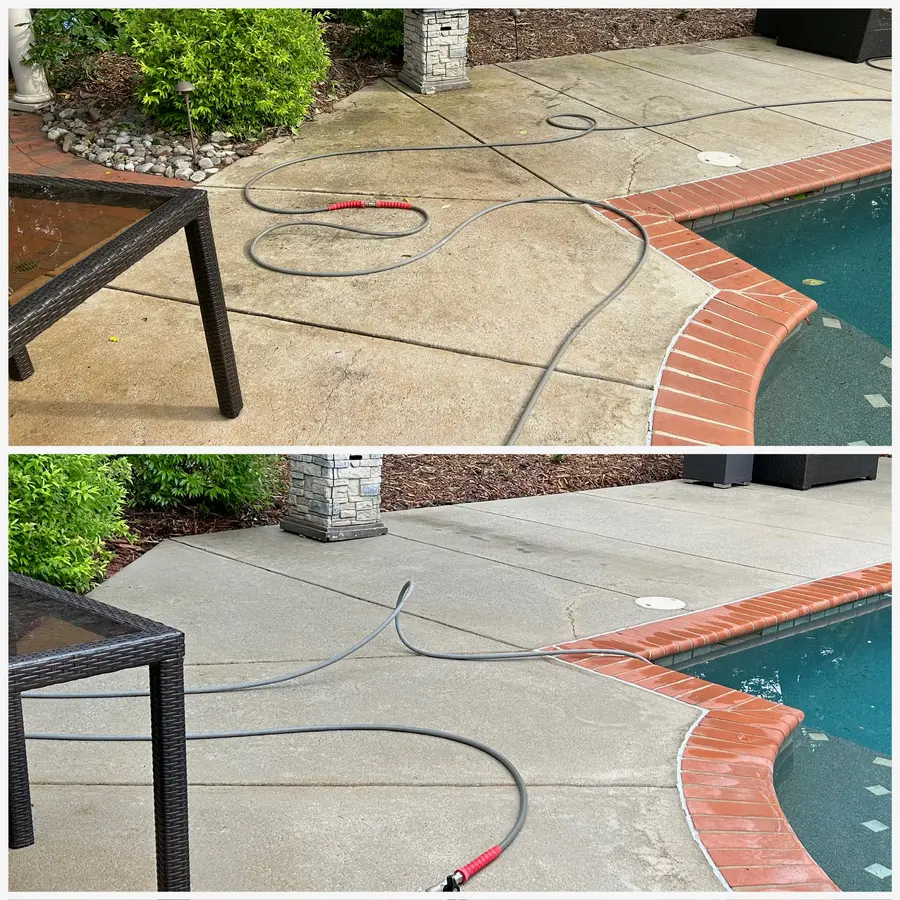
We assess the deck surface for the specific combination of issues present, whether that is algae, calcium scale, sunscreen residue, or some mix of all three, and identify the coping joint locations to treat carefully rather than with full pressure. Chemical treatment for scale or algae gets applied and dwell time to work before any pressure rinse, and pressure across the open deck surface stays moderate throughout, especially near coping and any decorative or textured finish.
Most pool deck jobs take one to three hours depending on size and how much buildup has accumulated.
What goes wrong when this is done badly
The most common mistake is treating a pool deck exactly like a driveway, running the same aggressive pressure setting without accounting for the coping joint risk or the fact that calcium scale needs chemical dissolution rather than mechanical force. The second is skipping the degreasing step for sunscreen and lotion residue and assuming the algae treatment will handle it too, which leaves a yellowish film behind even after the deck otherwise looks clean. The third is cleaning a pool deck after the season opens and the pool is already filled, without protecting the pool water from runoff, which can introduce cleaning chemicals into water that then needs its own chemical rebalancing before it is safe to swim in again.