What parking lot cleaning is actually solving for
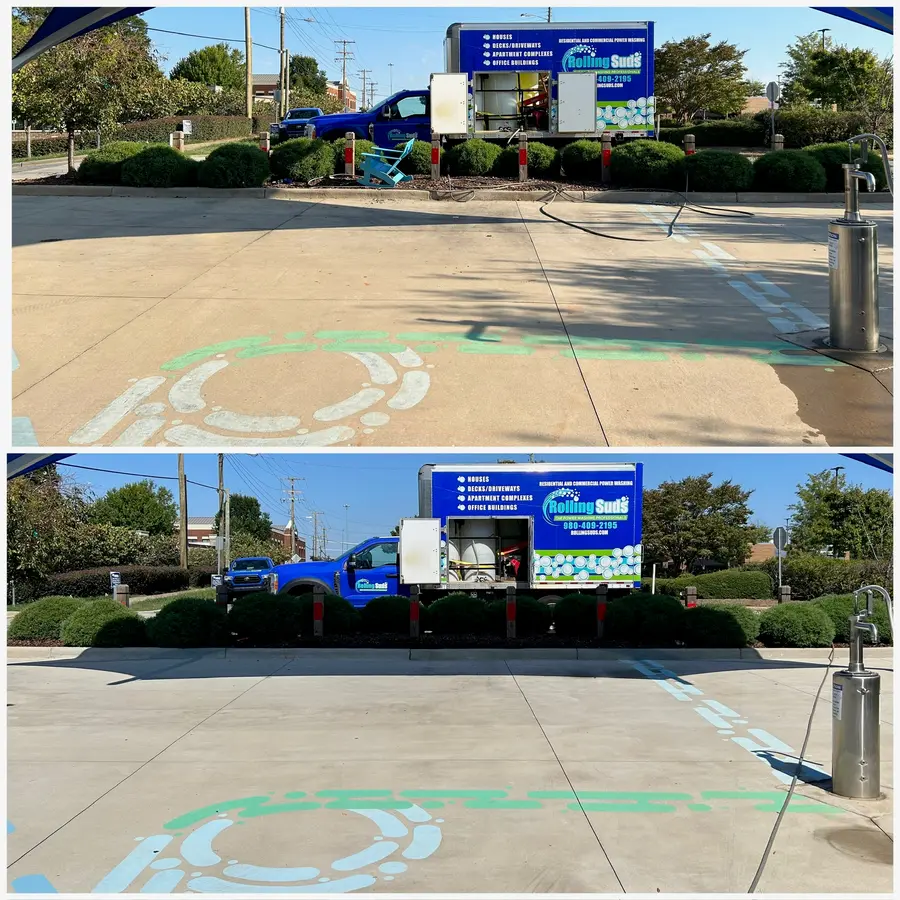
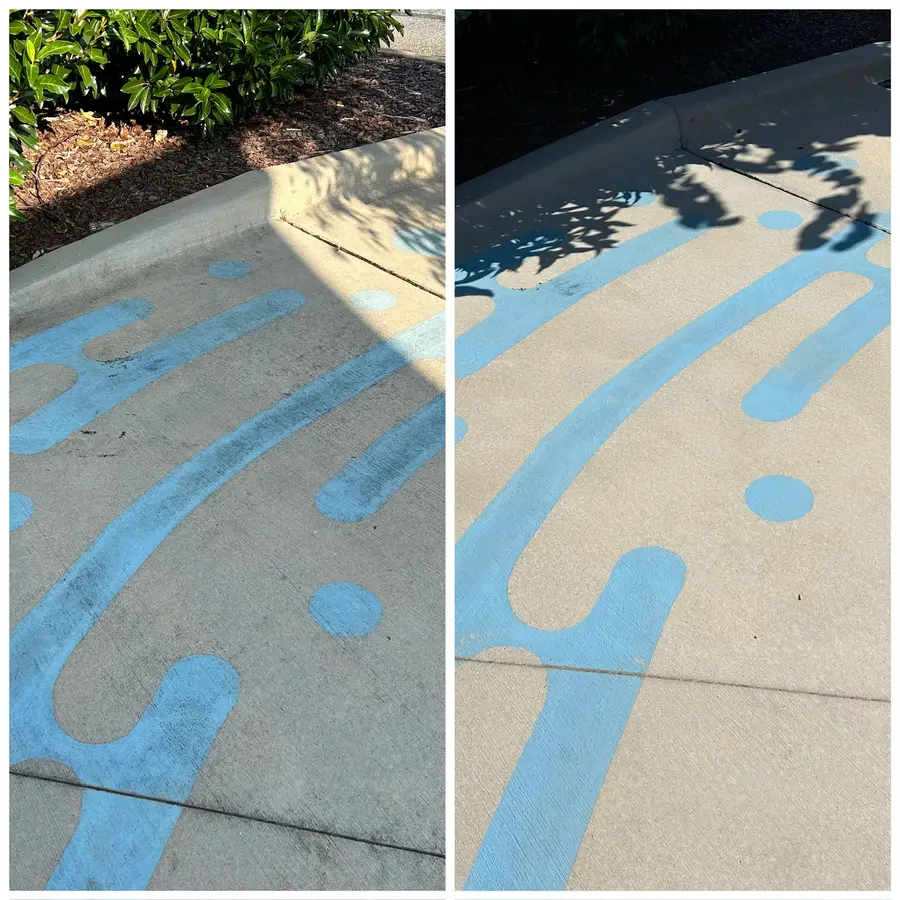
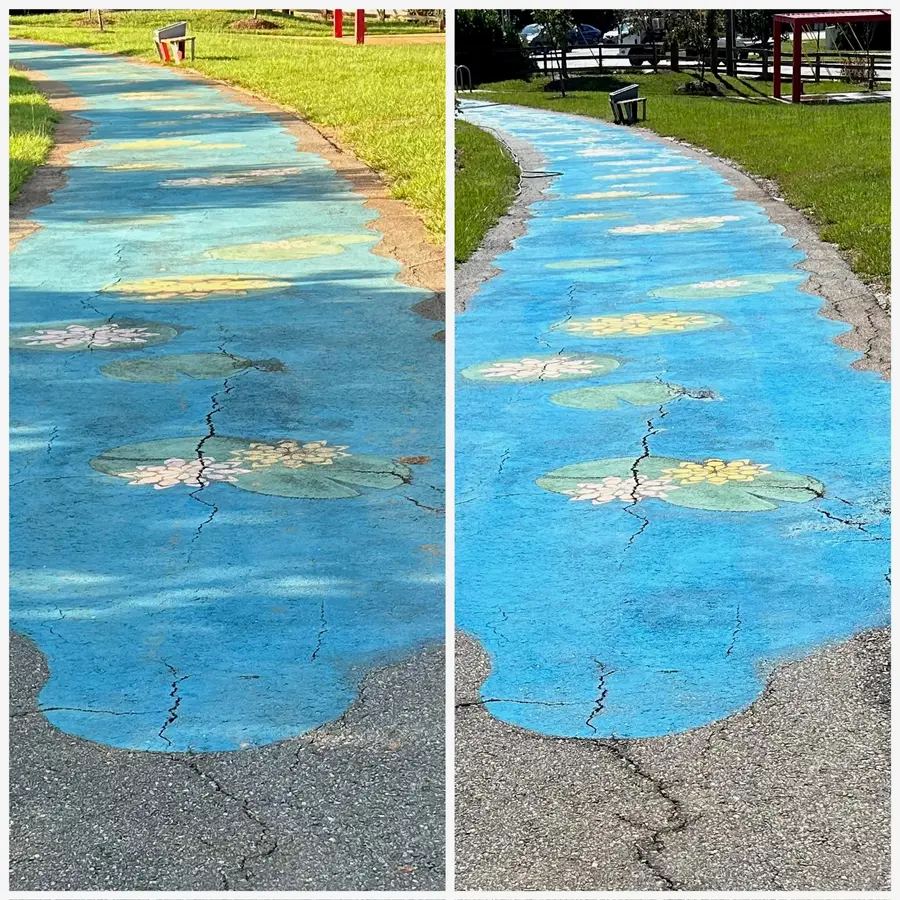
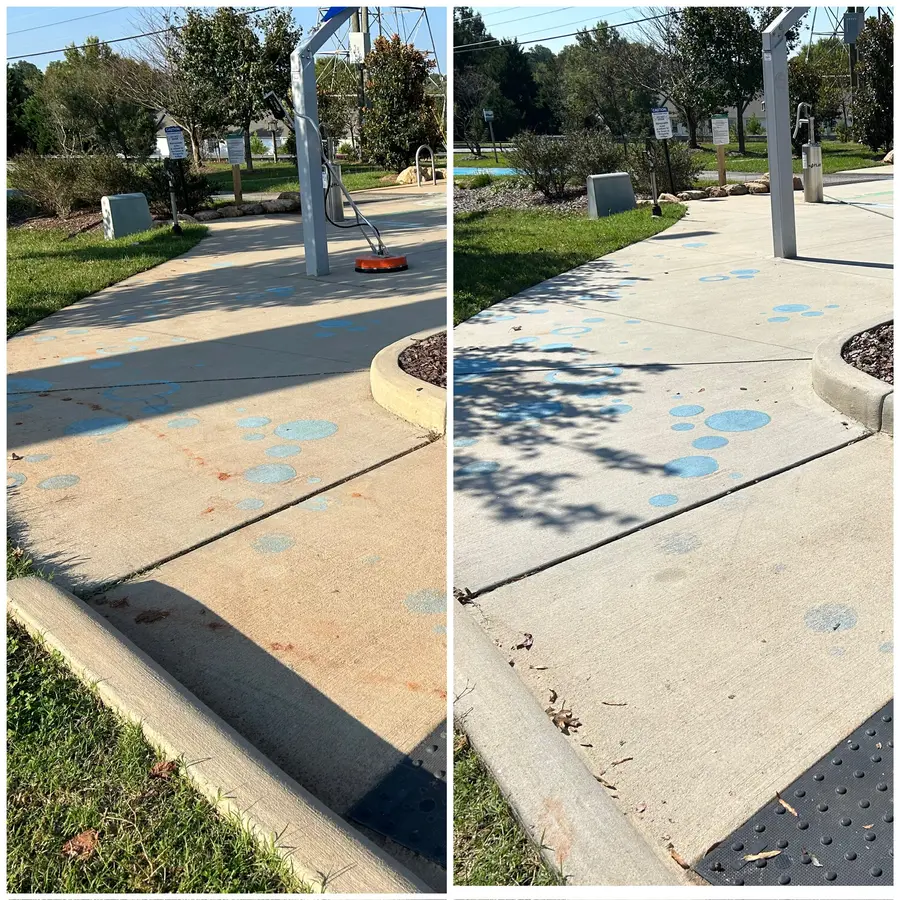
A dirty parking lot is the first thing a customer, tenant, or visitor sees before they reach your door, and it is also one of the most overlooked maintenance items on a commercial property. Oil stains from parked cars, tire marks near entrances, gum near storefront doors, and general grime buildup accumulate slowly enough that property managers stop noticing them day to day, until a tenant or a customer complaint brings it up.
Cleaning a parking lot is not the same job as cleaning a driveway at a larger scale. Commercial lots have striping that needs to survive the process, drainage patterns that determine where water goes, and in the case of parking decks, structural considerations that change how much pressure is safe on a given surface. Getting oil and grime off the surface is the easy part. Doing it without creating a new problem, faded striping, water pooling against a foundation, or runoff into a storm drain, is where the job actually gets earned.
Oil stains need pretreatment, not just pressure
Oil and grease do not lift with water pressure alone. Oil bonds with asphalt at a molecular level over time, especially in Charlotte’s summer heat, which softens asphalt enough for oil to work its way deeper into the surface than it would in a cooler climate. A straight pressure wash on an oil stain without pretreatment usually just spreads the stain into a lighter, wider version of itself rather than removing it.
We treat oil and grease stains with a degreaser first, giving it time to break the bond between the oil and the pavement surface, then follow with a surface cleaner pass at pressure calibrated to the pavement type. Fresh stains lift faster than stains that have been sitting for months or years. A lot with a chronic oil problem from a specific source, a loading dock, a delivery bay, a spot where a maintenance vehicle parks regularly, often needs a longer pretreatment dwell time on that specific area even if the rest of the lot is in good shape.
Striping preservation is a real cost if it goes wrong
Restriping a parking lot after a wash job that faded or lifted the paint is a bigger expense than the cleaning itself, and it is completely avoidable with the right approach. Properly cured striping paint, generally anything more than 30 days old, holds up fine against a standard surface-cleaner pass at correct pressure. Freshly painted lines, or lines that were already worn thin before we arrive, need a different touch.
Before starting, we walk the lot and note striping condition. Fresh paint gets a lower-pressure pass or gets worked around entirely if it is inside a very recent repaint window. Already-worn lines get flagged so you know that condition exists independent of anything we do, since a lot with faded lines before cleaning will still have faded lines after, just cleaner pavement around them. If you are planning a restripe soon anyway, tell us and we can time the wash right before the new paint goes down so the surface is properly prepped.
Drainage, runoff, and where the water actually goes
Every parking lot is graded to drain somewhere, usually toward a storm drain, a retention pond, or a low corner of the property. When we clean a lot, that same drainage carries whatever came off the surface: dirt, oil residue after pretreatment, and general grime. On sites where the drainage leads directly to a storm drain that connects to a waterway, we manage wash water flow and avoid concentrating heavy runoff straight into that drain during the heaviest part of the job. On sites with a retention area or a grassed buffer, drainage is less of a concern, but we still avoid pooling water against building foundations, entry doors, or handicap ramps where standing water becomes both a slip hazard and a nuisance.
If your property has a specific stormwater management plan on file, tied to a site permit or a lease requirement, tell us before the job and we will plan the work to fit it.
Parking decks add a structural dimension to the job
Cleaning a parking deck is a different job from cleaning a surface lot, because a deck is a structural element with expansion joints, drainage systems built into the slab, and often a waterproofing membrane on the walking and driving surface that a standard surface cleaner can damage if the pressure is set wrong. Decks also concentrate oil and fluid staining more than surface lots do, since vehicles sit in the same stalls day after day rather than spreading across a larger footprint.
We check deck surface type and any visible membrane or coating before setting pressure, and we pay particular attention to expansion joints, since forcing water and debris into a joint designed to flex can cause problems well beyond a cosmetic stain. Deck cleaning is also where night work matters most, since decks tend to have the least flexibility for closing sections during business hours without disrupting tenant or visitor parking.
Night work is often the default, not the exception
Retail lots, restaurant lots, and attached parking decks almost always get scheduled outside business hours. A lot full of customer or employee vehicles during the day cannot be cleaned around parked cars without missing large sections, and a wet lot during business hours creates a slip hazard you do not want near your entrance. We default to overnight or early morning scheduling for any lot with regular daytime traffic, and the lot is dry and back in normal use before the property opens.
Office lots with lighter after-hours traffic sometimes have more flexibility, but even there, coordinating around move-in/move-out schedules or a specific tenant’s operating hours usually points toward night or weekend work as the simpler option.
The liability case for a clean lot, beyond appearance
A parking lot is one of the highest-traffic, highest-liability surfaces on any commercial property, and its condition affects more than curb appeal. Oil stains and grime buildup are cosmetic, but the same lot that looks neglected is often the lot with worn striping that no longer clearly marks pedestrian paths, faded handicap markings, or slick spots where oil residue mixed with rain creates a genuine slip hazard for anyone walking to their car. A documented, regular cleaning schedule is one of the more straightforward ways a property manager can show a maintained property if a slip-and-fall claim ever comes up, since it demonstrates ongoing attention rather than a lot left to accumulate hazards unaddressed.
There is a retention angle here too. Retail centers and office parks compete for tenants and customers against comparable properties nearby, and a stained, grimy lot is one of the first things anyone notices pulling in, before they ever reach a storefront or a lobby. A clean lot does not close a lease by itself, but a consistently dirty one works against every other investment a property makes in its tenant mix and marketing.
Working with your existing vendor relationships
Most commercial properties already have a landscaping company, a striping contractor, or a general facilities vendor on site regularly, and parking lot cleaning fits into that broader maintenance picture rather than existing in isolation. We are glad to coordinate timing with a restriping contractor if a lot is due for new paint soon, cleaning right before new lines go down so the surface is properly prepped rather than cleaning on an unrelated schedule that does not account for what else is happening on the property. If your property management company tracks vendor certificates of insurance centrally, we provide what is needed for that file before the first visit rather than waiting to be asked.
What moves the price
Total square footage of the lot or deck level is the baseline factor, since it directly sets crew size and hours on site. Oil stain count and severity change the number meaningfully, since heavy staining needs pretreatment time that a clean lot does not require. Whether striping needs careful preservation or the lot is getting restriped soon anyway affects how much time gets spent working around versus through the painted areas. Drainage layout and slope also factor in, since a lot with complicated grading or a nearby storm drain needs more careful water management than a simple flat lot draining to open ground.
Weather, timing, and why the calendar matters more than it seems
Parking lot cleaning depends on weather more than most exterior services, since a lot needs to dry sufficiently before the property reopens to normal traffic, and rain during or shortly after a job can undo the degreaser work on any stains that had not fully lifted yet. We watch the forecast when scheduling and build in buffer time on jobs planned for overnight completion before a morning opening, rather than cutting it close on a day with a marginal forecast.
Temperature affects the job too, particularly for oil stain pretreatment, since degreaser chemistry works faster in warmer weather and slower in cold conditions. Charlotte’s mild winters mean this is less of a seasonal constraint than it would be further north, but a January job on a cold morning still takes a bit longer to achieve the same result as the same job in summer heat. We account for this in scheduling rather than promising the same turnaround regardless of season.
What to expect on the day
We walk the lot first to note striping condition, oil stain locations, and drainage direction. Heavy oil stains get pretreated with a degreaser and given time to work before the main pass. The lot gets cleaned section by section with a surface cleaner at pressure calibrated to the pavement type, working around any striping that needs a lighter touch. Water is directed away from building entrances and, where the site allows, away from storm drains during the heaviest runoff. Most surface lots dry within a few hours depending on weather, and the lot is ready for full traffic well before a scheduled opening on overnight jobs.
Recurring contracts and how frequency gets decided
Most commercial properties settle on a parking lot cleaning frequency after seeing how the lot actually holds up between visits, rather than committing to an interval upfront based on a guess. We often recommend starting with a single visit to establish a clean baseline, then setting a recurring interval based on what you and we both observe about how quickly oil staining and general grime reaccumulate on your specific lot. A lot near a quick-service restaurant with a drive-thru will accumulate differently than an office park lot with light daytime-only traffic, and the right interval reflects that rather than a generic quarterly or annual default applied without regard to actual conditions.
Once a recurring schedule is in place, we track visit history for your property, which makes it easier to spot whether a specific area, a loading zone, a specific set of parking stalls, or an entrance lane, is developing a chronic staining problem that might need a different approach than the general lot cleaning covers.
Call 980-888-8283 to schedule a walk-through of your lot or deck, or reach out through Rolling Suds of Northeast Charlotte or Rolling Suds of West Charlotte for your side of the metro.