Dealing with an HOA violation letter
If you are reading this because a letter showed up citing mildew, algae, or dirty siding, you are in the most common situation we get called for. Under North Carolina’s Planned Community Act, most associations enforce on complaint rather than on a fixed schedule, and the notice typically gives you 14 to 30 days to cure before anything escalates.
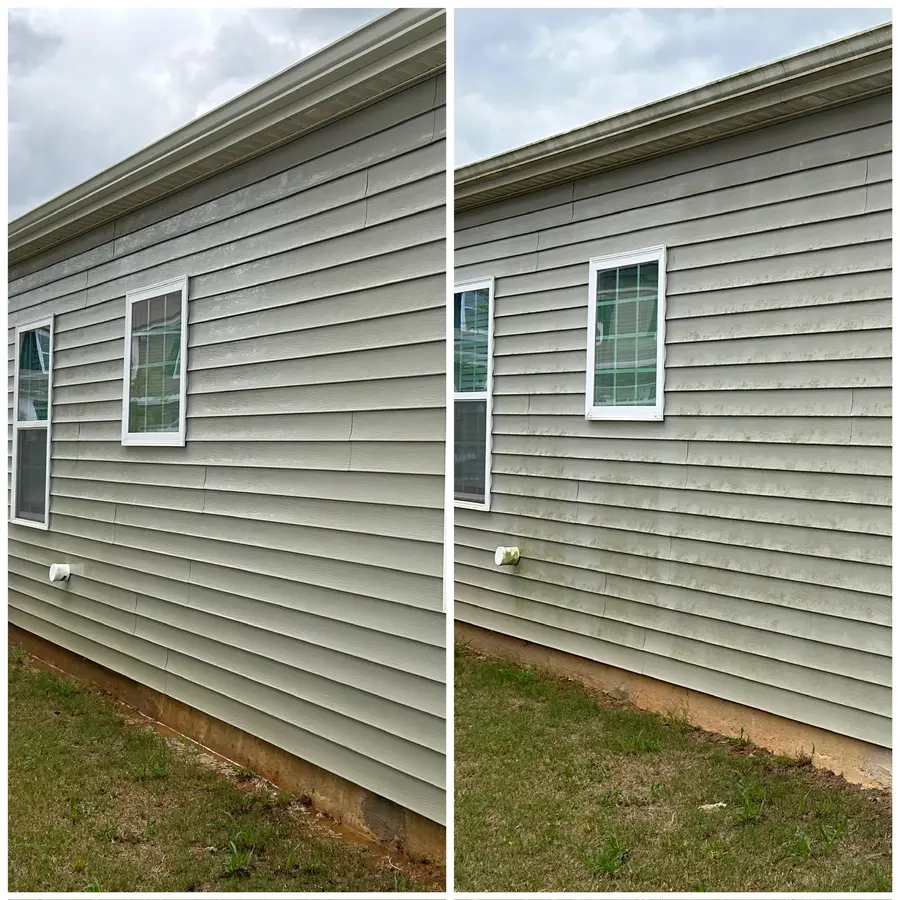
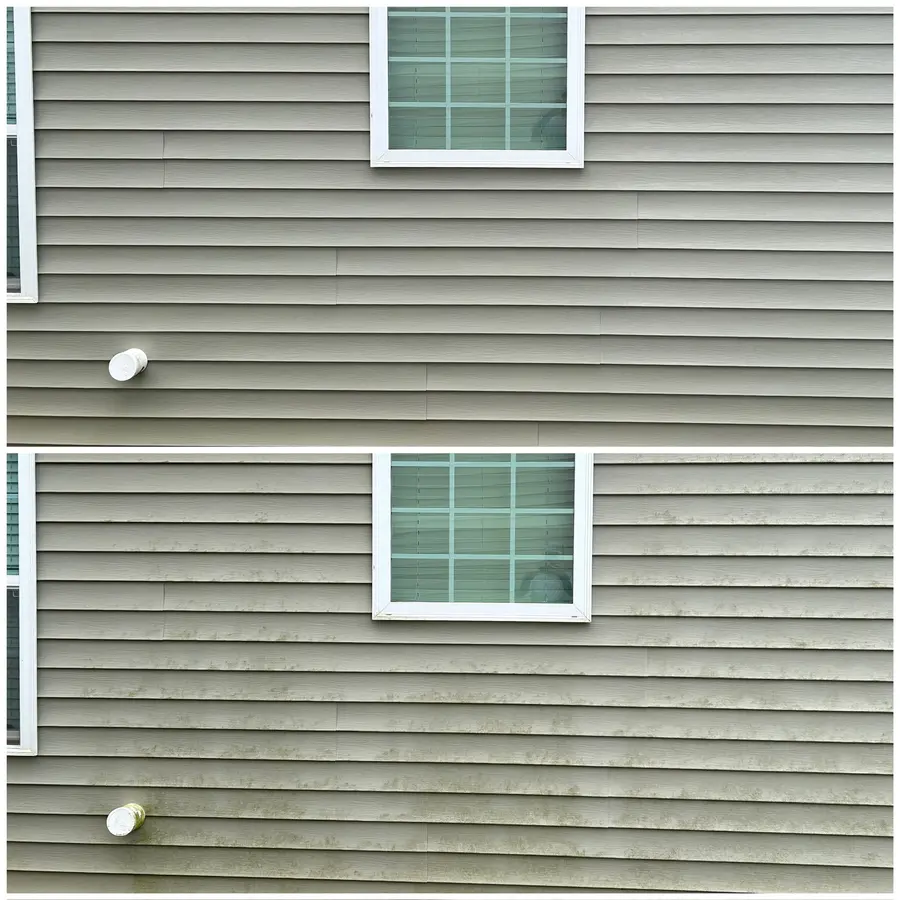
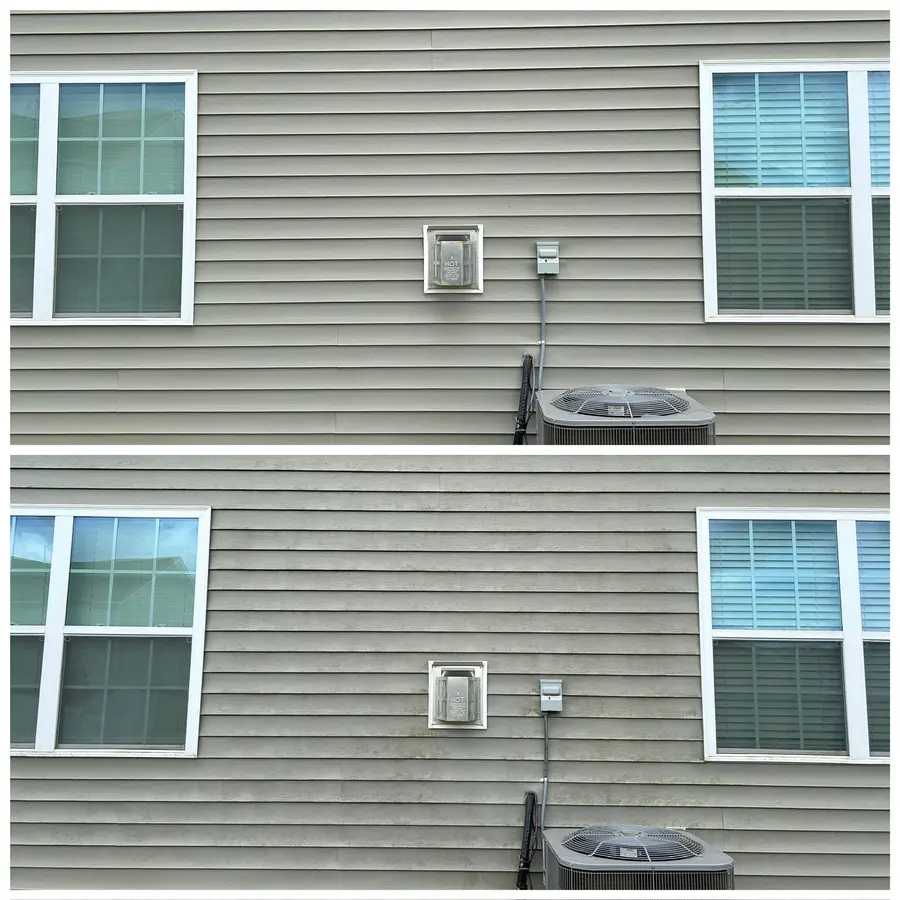
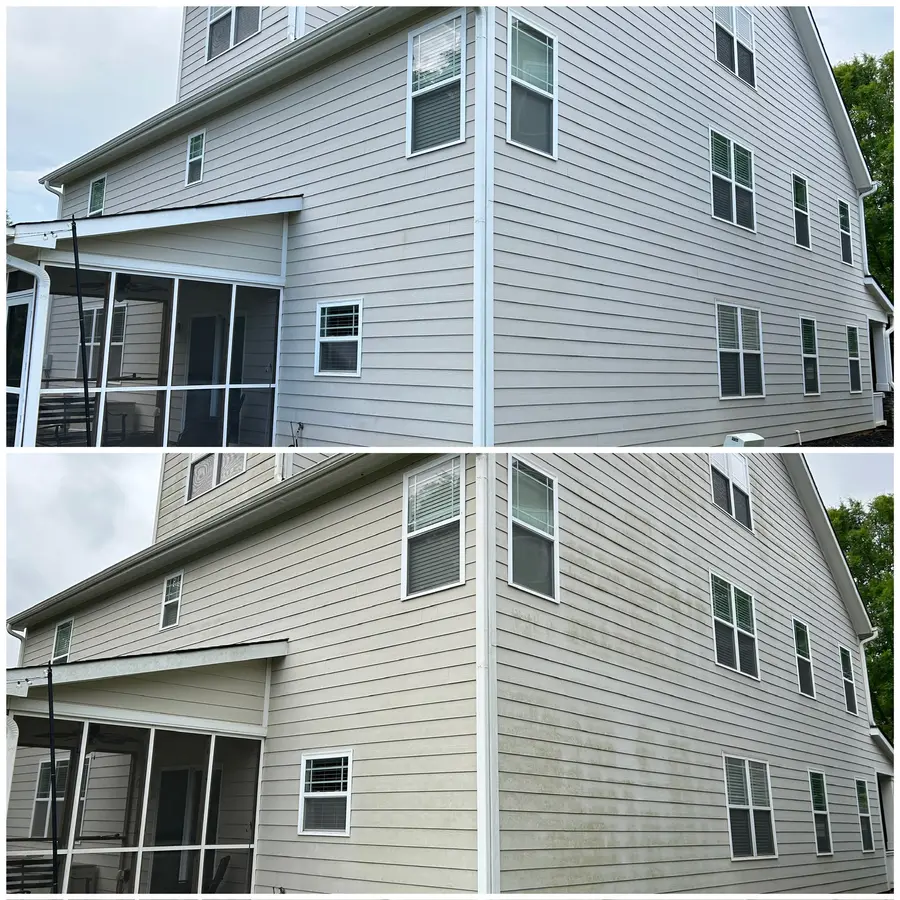
Tell us the date on the letter when you call. We schedule around cure deadlines, and residential work is typically same week anyway. We will also photograph the affected elevations before and after so you have documentation to send back to the board or the management company rather than asking them to take a look and take your word for it.
If the letter cites the fence or the driveway as well as the house, say so up front and we will quote the items separately so you can see what each one costs rather than getting one bundled number you cannot break apart.
What house washing actually covers
House washing cleans the exterior siding, trim, soffits, and typically the foundation line of your home. It is different from roof cleaning, gutter brightening, or driveway cleaning, which each address a separate surface with its own method. When people say they want their house pressure washed, what they usually mean, and what we recommend, is a full soft wash of the exterior.
We soft wash rather than pressure wash on siding for a specific reason. Charlotte’s housing stock spans several distinct eras, from 1920s Colonial Revival and Craftsman bungalows in Myers Park and Dilworth, to 1990s and 2000s brick and EIFS construction in Ballantyne, to newer Hardie fiber-cement and vinyl builds in Steele Creek and Berewick. High pressure damages several of those materials in ways that are not always visible right away.
Why soft washing and not pressure washing
Soft washing uses water pressure under 500 psi, often close to garden hose pressure, combined with a cleaning solution formulated to kill algae, mold, and mildew rather than blast it off mechanically. Pressure washing runs 1,500 psi or higher and relies on force alone.
Vinyl siding has seams designed to shed rain, not take a direct pressurized stream. Pressure aimed the wrong way forces water behind the panels, where it sits against the house wrap and sheathing and becomes hidden mold that nobody notices until a wall starts smelling musty.
EIFS and synthetic stucco, common on homes built in Charlotte’s 1990s through 2000s suburban boom, is a thin hard finish coat over foam insulation board. High pressure can puncture that coat outright or force water behind the sealed wall assembly, where it has no way to dry out and leads to hidden rot.
Painted wood trim and soffits can lose paint adhesion at seams and corners under direct pressure, turning a cleaning job into a paint job you did not plan for.
Brick veneer generally tolerates more pressure than vinyl or EIFS, but unpainted historic brick in Dilworth and Myers Park falls under a different standard entirely, capped by the City of Charlotte’s Historic District Commission at 200 psi, roughly garden hose pressure, to protect original mortar and brick face on structures that require a Certificate of Appropriateness before any exterior work.
What it costs and what actually moves the price
Most Charlotte homes run between $250 and $550 for a full house wash. Where you land in that range depends on three things.
Square footage and story count. A single-story ranch in Cotswold takes less time than a two-story home in Highland Creek that needs ladder or lift work to reach upper siding and gables safely.
Siding material. EIFS stucco and historic brick need a more careful, slower chemical application than vinyl or Hardie board, which adds labor time even on a similarly sized home.
Buildup since the last wash. A home that has never been washed, or has gone several years, needs a stronger solution mix and sometimes a second pass on the worst areas, which a home on a regular annual schedule rarely needs.
We walk the exterior before quoting, note the siding material and any problem areas like heavy shade or gutter staining, and give you a firm number before starting.
How often Charlotte’s climate actually requires this
Charlotte sits in a Piedmont climate with relative humidity ranging from about 59 percent in April to 74 percent in August, which is enough to drive real algae and mildew growth, especially on shaded surfaces. Tree canopy is the biggest local variable. Older, heavily wooded neighborhoods like Myers Park and Dilworth, with their signature century-old oak canopy, see algae and mildew return on north-facing walls faster than newer, less shaded subdivisions like Steele Creek or Berewick, where construction dust and pollen are currently the bigger driver of visible grime rather than organic growth.
As a general rule, plan on a full wash once a year. If your home sits under heavy shade or you notice green or black streaking specifically on north-facing walls, once every 9 to 12 months holds up better. Sun-exposed sides in newer, less canopied neighborhoods often stretch to 18 months between washes.
What to expect on the day
A crew arrives, walks the property to confirm siding type and any areas needing extra attention, and covers or pre-wets landscaping near the foundation. The soft wash solution goes on first and gets time to sit and work, typically 10 to 15 minutes depending on buildup, before a low pressure rinse removes it along with the dead algae, mold, and dirt it lifted. A full house wash generally takes two to four hours depending on size and siding complexity.
You do not need to be home, though we ask that patio furniture, grills, and anything fragile be moved back from the walls, and that windows and doors stay closed during the application.
What goes wrong when house washing is done badly
The most common problem we see from other companies is a crew advertising soft washing but running a standard pressure washer with a chemical injector set too high, which defeats the purpose and carries the same risks as straight pressure washing. Ask specifically what psi they run against siding, not just whether chemicals are involved.
The second issue is skipping the rinse step or rinsing too quickly to save time, which leaves a faint chemical smell and streaking residue that shows up within days. A proper soft wash needs the full dwell time on the solution and a thorough low pressure rinse afterward, not a fast pass.
The third is treating every siding type identically. A crew that runs the same chemical concentration and pressure on EIFS stucco that they run on vinyl is going to eventually cause damage on one or the other, and that damage often does not show up until weeks later when moisture has had time to work its way into the wall assembly.