What driveway cleaning covers and why the method differs from house washing
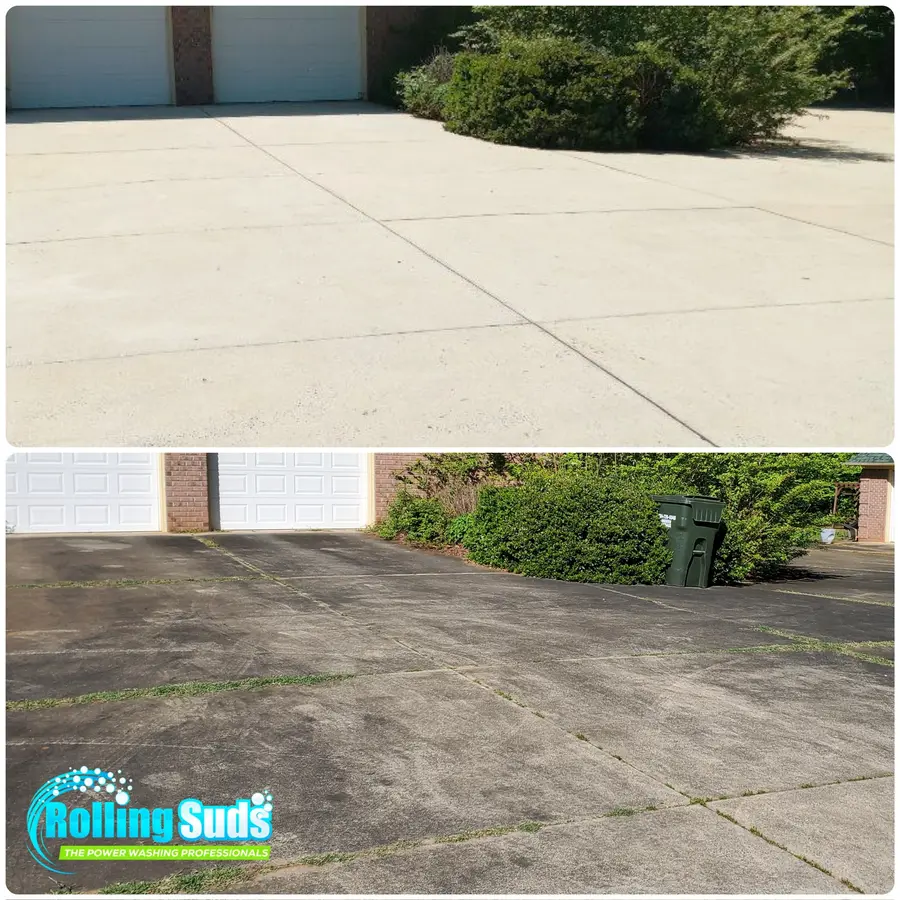
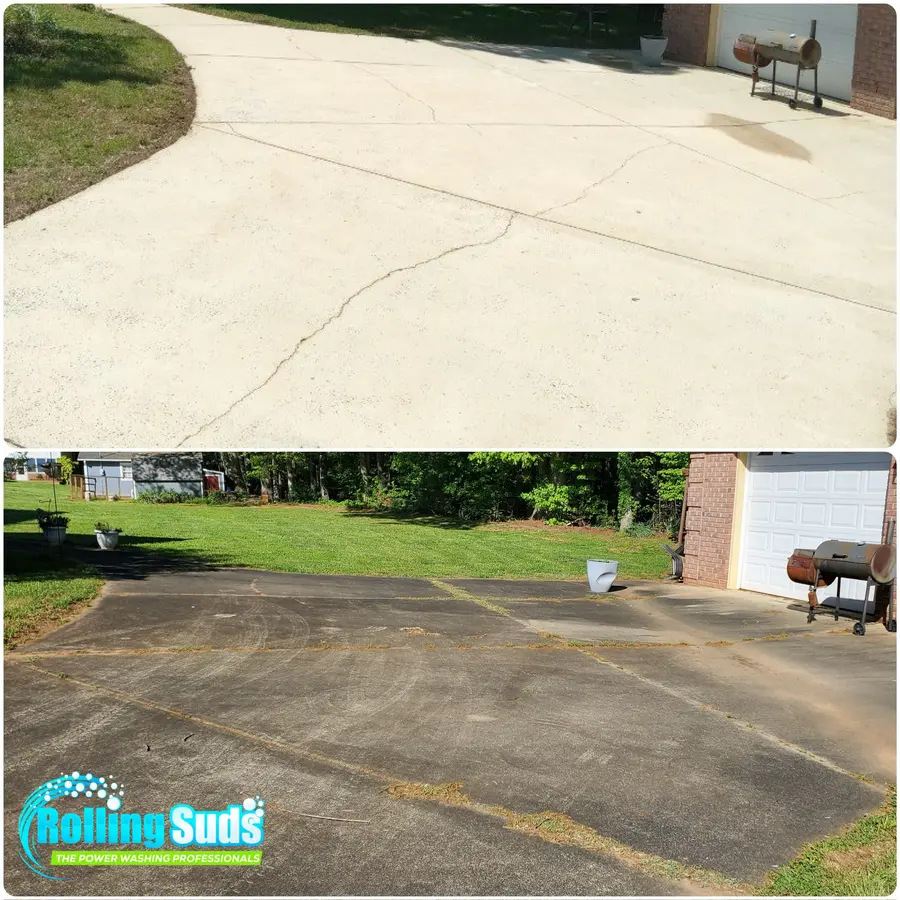
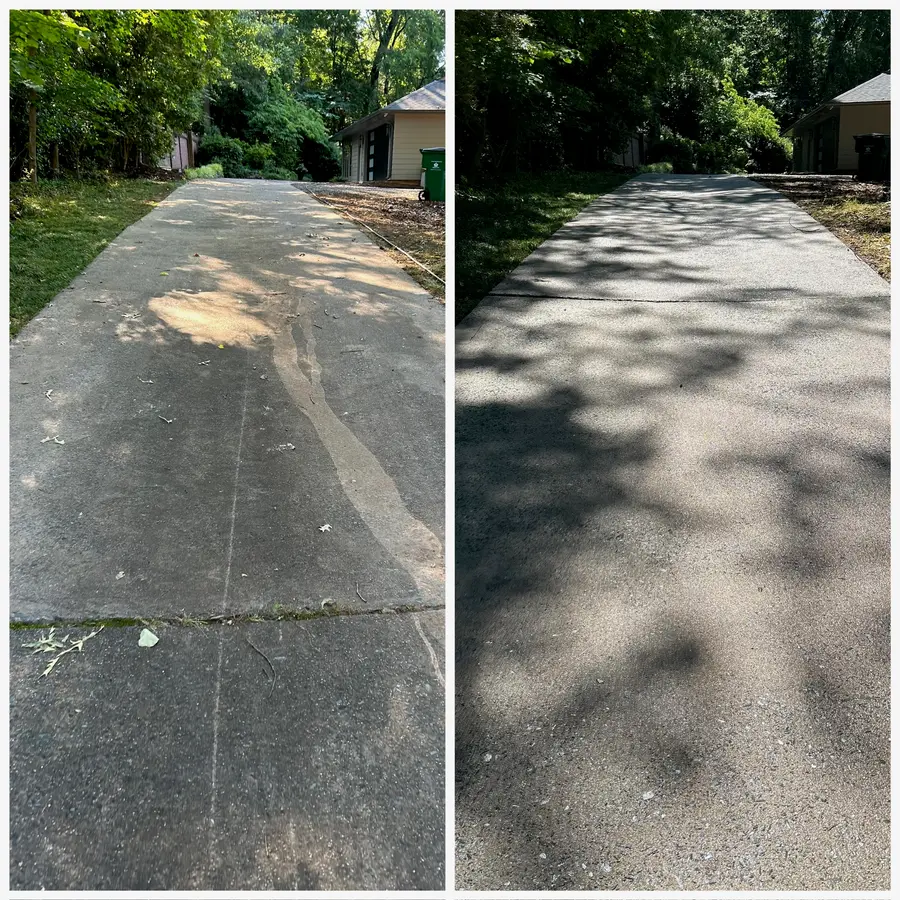
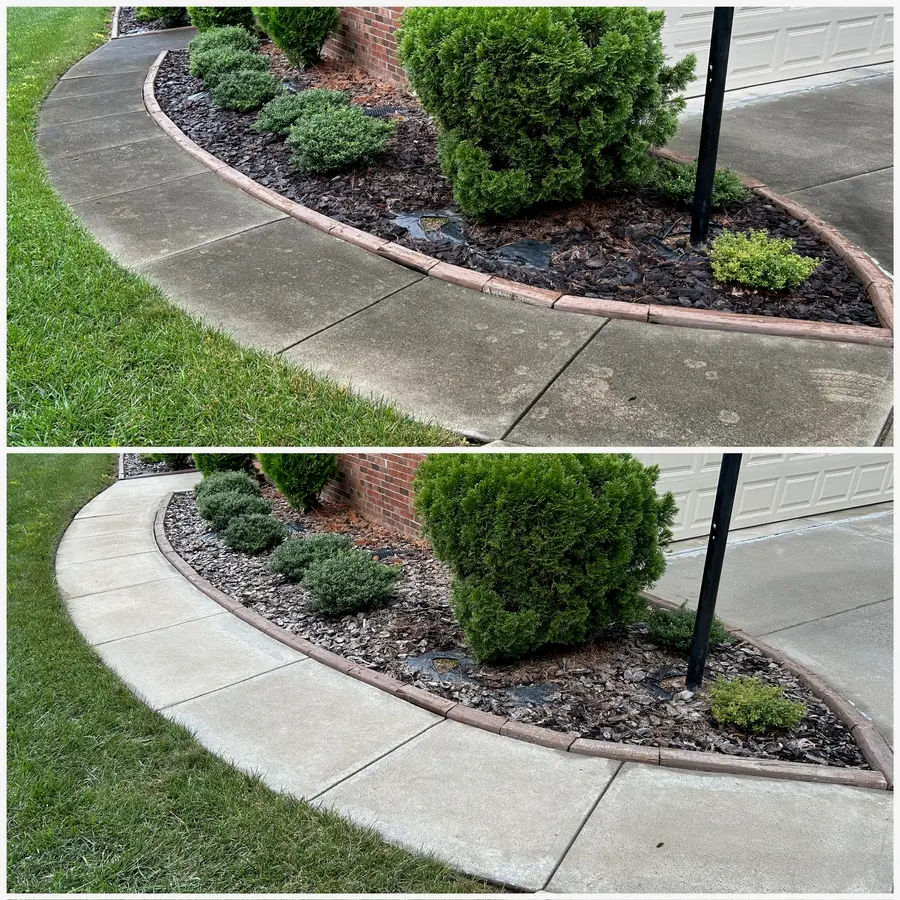
Driveway cleaning is a different job from house washing in almost every respect. Bare poured concrete tolerates significantly more pressure than vinyl siding, EIFS stucco, or painted wood, so this is typically a surface cleaner job rather than a soft wash. A surface cleaner is a rotating flat attachment on a pressure washer that covers a wide swath evenly, which prevents the streaking a single wand pass leaves behind and keeps pressure distributed rather than concentrated in one spot.
That said, not every stain on a driveway responds to pressure alone, and knowing the difference between what pressure fixes and what needs chemistry first is where a real cleaning job separates from a rinse that looks fine for a week and then disappoints.
Why some stains need chemistry before pressure, not instead of it
General dirt, dust, and pollen film lift fine with a surface cleaner and water alone. Three specific stain types common on Charlotte driveways do not.
Red clay staining comes from Piedmont Cecil soil, which carries kaolinite clay high in iron oxide. That iron oxide bonds chemically into the concrete surface, particularly on unsealed or porous concrete, rather than sitting on top the way ordinary dirt does. Bleach and soap have nothing to react with since the staining is mineral, not organic, and pressure alone tends to etch the concrete surface without actually lifting the bonded iron oxide, sometimes leaving a rougher patch that stains again faster than before. An oxalic acid treatment breaks that bond and needs to happen before any pressure pass.
Oil stains from parked vehicles need a degreasing pre-treatment to break the oil down before rinsing, since pressure alone on an untreated oil stain just spreads it into a wider, thinner stain across a larger area rather than removing it.
Rust staining, whether from irrigation heads, fertilizer, or metal furniture, responds to the same oxalic acid chemistry as red clay, since both involve iron oxide bonding into the surface.
What it costs and what actually moves the price
A typical concrete driveway in Charlotte runs $150 to $260 for a standard cleaning. Two things determine where a job lands within that range.
Total square footage. A standard two-car driveway takes less time and solution than a long driveway serving a three-car garage or one with a wide turnaround area.
Staining type. A driveway with straightforward dirt and pollen buildup costs less than one with red clay tracking, oil spots, or rust rings, since those need a separate chemical pre-treatment step that adds time and materials beyond the surface cleaning pass itself.
We look at the driveway before quoting, note whether we are dealing with general grime or specific staining that needs chemistry first, and give you a firm number that reflects what the surface actually needs rather than a blanket price that assumes every driveway is the same.
How often Charlotte’s climate and soil actually require this
Most driveways here need attention once every 12 to 18 months. Driveways under heavy tree canopy, common in older neighborhoods like Myers Park, Dilworth, and Cotswold, tend to develop mildew in shaded sections faster and land closer to the 12-month mark. Driveways near unsealed mulch beds or bare soil edges see red clay tracking return faster regardless of shade, since every heavy rain carries a fresh supply of clay particles onto the surface.
Charlotte’s humid Piedmont summers, with relative humidity peaking around 74 percent in August, are enough to support real mildew growth in shaded driveway sections, particularly along the edge closest to a house or fence line where sun exposure is limited most of the day.
What to expect on the day
A crew inspects the driveway first, identifies any staining beyond general dirt, and applies a chemical pre-treatment to those specific areas if needed, giving it dwell time to work before any pressure touches the surface. The surface cleaner attachment then covers the full driveway evenly, and we rinse and check for any remaining spots that need a second targeted pass.
Most driveway jobs take one to two hours depending on size and whether chemical pre-treatment is involved. You do not need to move your vehicle out of the driveway entirely, just far enough to clear the section being worked on at any given time, and we will coordinate that with you directly.
What goes wrong when driveway cleaning is done badly
The most common mistake is skipping the chemical pre-treatment on red clay, oil, or rust staining and just running higher pressure to compensate. That typically fails to remove the stain and can etch or roughen the concrete surface trying, which leaves a patch that looks different from the surrounding concrete and stains faster going forward because the roughened surface has more pore area for new clay or oil to bond into.
The second is running full pressure uniformly across a driveway that already has cracking or joint separation, which can force water into the crack and wash out base material underneath, widening damage that was cosmetic into something structural.
The third is using too high a pressure setting on stamped or colored concrete, which can strip a sealer coat or color hardener finish and leave a visibly dulled patch that no amount of additional cleaning will restore, since that requires resealing or recoating the concrete rather than more washing.