Two different surfaces under one service name
Deck and patio cleaning gets treated as one service because homeowners usually want both done in the same visit, but they are genuinely different jobs with different methods, and treating them identically is a common mistake that damages one or the other.
A wood deck is a soft wash job. Composite decking sits somewhere in between, tolerating more pressure than wood but still benefiting from a chemical approach in shaded, algae-prone spots. A concrete or paver patio is closer to driveway cleaning, able to take real pressure through a surface cleaner attachment, but with the same red clay and mildew staining considerations that apply to any exterior hardscape in this region.
Why wood decking needs soft washing, not pressure
Wood is a soft, absorbent material compared to concrete or vinyl, and high pressure affects it in ways that are not always obvious until later. Direct high pressure held close to a board raises the wood grain, leaving a rough, fuzzy surface texture that never fully smooths back down. On softer wood species like pine, cedar, or older pressure-treated lumber, pressure can gouge the board outright, especially along a seam or a section that has already started to soften from moisture exposure.
Pressure also strips any existing sealer or stain coating faster than intended, which means a deck that was protected before cleaning can come out of the job bare and immediately vulnerable to Charlotte’s humidity and UV exposure until it gets resealed.
A soft wash approach uses low pressure with a cleaning solution that lifts algae, mildew, and general grime without raising the grain or damaging the wood fibers, and it is the correct default method for any natural wood deck regardless of species or age.
Composite decking and concrete or paver patios
Composite decking tolerates more pressure than natural wood since there is no grain to raise and no risk of gouging the way there is with real lumber, but manufacturers still typically specify a pressure ceiling in their care documentation, and shaded sections of a composite deck develop the same slippery algae film wood does, which responds better to chemical treatment than pressure alone regardless of the decking material.
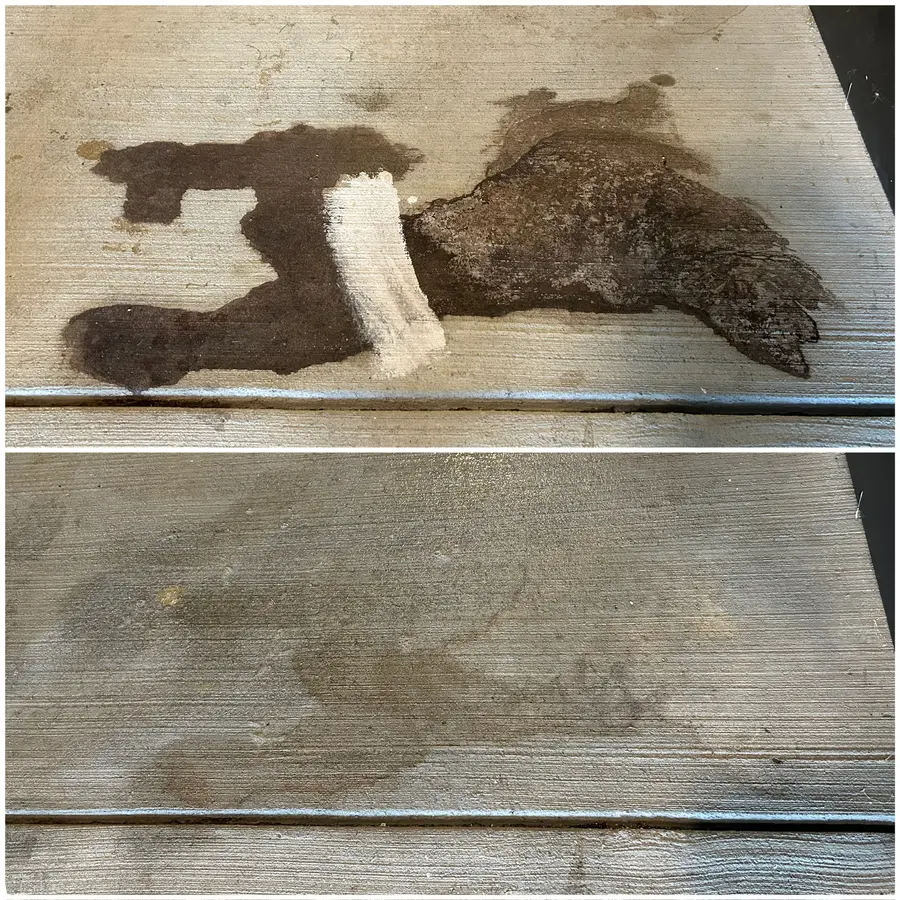
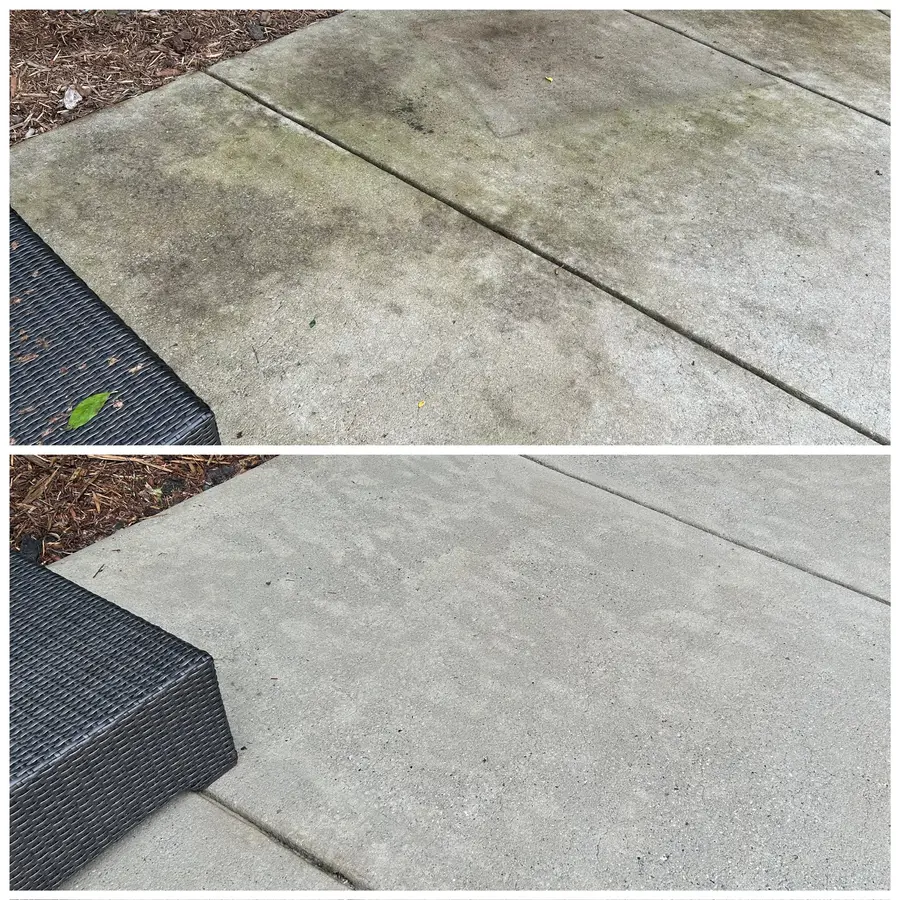
Concrete and paver patios function more like a driveway. They tolerate meaningfully higher pressure than any decking material, and a surface cleaner attachment covers them efficiently and evenly. But the same Piedmont clay and shade-driven mildew considerations apply here as anywhere else on your property. Red clay tracking onto a patio from adjacent landscaping needs the same oxalic acid chemical treatment before pressure that a driveway does, and shaded corners against the house or under a covered porch section develop mildew and algae faster than open, sun-exposed patio areas.
Why the shade pattern on your specific patio matters
If you have noticed your patio gets slippery and discolored specifically in the corners near the house or under an overhang, while the open middle stays relatively clean, that is not random. Shaded areas retain moisture after rain significantly longer than sun-exposed areas, and that extended dampness is exactly what algae and mildew need to establish and spread. This pattern shows up consistently across Charlotte properties regardless of neighborhood, though it is more pronounced under the heavier, more mature tree canopy found in older neighborhoods like Myers Park and Dilworth compared to newer, less shaded construction in Steele Creek or Berewick.
What it costs and what actually moves the price
Most deck and patio jobs in Charlotte run $150 to $400. Where a specific job lands depends on two main factors.
Material. Wood decking takes longer per square foot than a concrete patio because the soft wash approach requires more careful, slower application than a surface cleaner pass on concrete or pavers, and larger or multi-level decks with railings and stairs add time beyond the flat square footage.
Whether it is one visit or two. Booking a connected deck and patio together in a single appointment is more efficient for us than two separate visits, and that efficiency generally reflects in the price compared to booking each as a standalone service on different days.
How often this actually needs doing in Charlotte
A wood deck under regular use and normal Charlotte weather exposure typically needs cleaning once a year, with resealing recommended every one to two years depending on the sealer product and how much direct sun the deck gets, since UV breaks down sealer coatings faster than shade does even though shade drives more algae growth. Concrete and paver patios generally hold up 12 to 18 months between cleanings, similar to a driveway, with shaded sections sometimes needing spot attention sooner.
What to expect on the day
For a wood deck, we clear or ask you to clear furniture and grills off the surface, apply the soft wash solution, let it dwell to work on algae and mildew, then rinse at low pressure. For a patio, we identify any red clay or mildew staining that needs chemical pre-treatment before running the surface cleaner across the full area. A combined deck and patio job typically takes two to three hours depending on total square footage and material mix.
What goes wrong when this is done badly
The most damaging mistake is running a standard pressure washer directly on wood decking at the same pressure used on a concrete patio, which raises the grain, strips sealer, and can gouge softer boards, sometimes not becoming obvious until the wood grays and roughens over the following weeks as it dries and weathers without protective coating.
The second is skipping chemical pre-treatment on red clay or mildew staining on a patio and relying on pressure alone, which either fails to lift the stain or etches the surface trying, leaving a rougher patch that stains again faster than before.
The third is cleaning a deck without addressing whether it needs resealing afterward. A cleaned but unsealed deck left exposed to Charlotte’s humidity and UV starts graying again within a few weeks, which makes the cleaning job look like it failed when the real issue is a missing follow-up step.