Multifamily properties have surfaces a single house never has
A house exterior is siding, maybe a driveway, maybe a deck. An apartment community has all of that multiplied across many buildings, plus breezeways, stairwells, and parking decks that see constant foot and vehicle traffic in a way no single-family home does. Those shared-use surfaces are where a multifamily property actually shows wear the fastest, and they are also the surfaces a resident notices every single day walking to their unit.
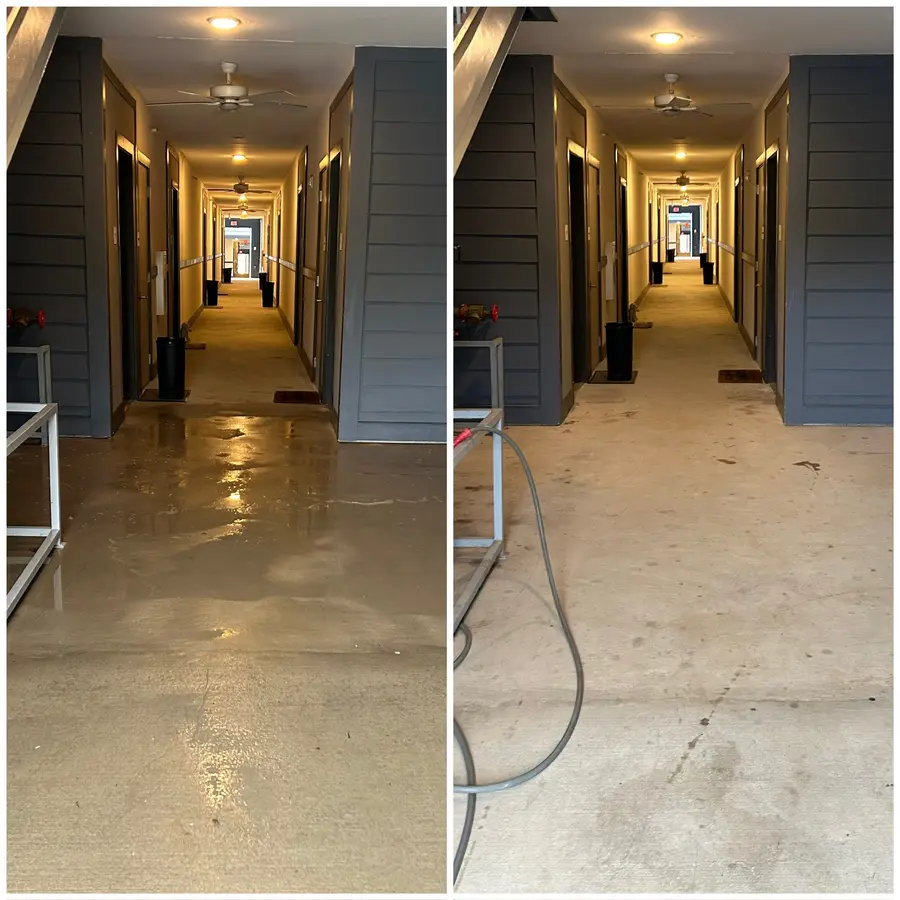
Breezeways in particular are a different cleaning problem than a house exterior. They are covered, which means they stay shaded and damp longer after rain than an open wall. They see daily foot traffic that tracks in dirt, and they sit near trash chutes and corrals that leave residue and odor if not addressed. Cigarette smoke film builds on breezeway ceilings and walls in a way that simply does not happen on an open exterior wall exposed to sun and rain. A breezeway that looks fine at a glance often has grime built up in corners, along ceiling lines, and around light fixtures that a resident walks past twice a day without consciously noticing until it gets bad enough to complain about.
Breezeways and stairwells, the most requested and most overlooked area
Property managers ask about breezeways more than almost any other single item on a multifamily property, and it makes sense why. It is the space every resident and every prospective tenant touring the property walks through, and it carries first-impression weight that a back-facing exterior wall never will.
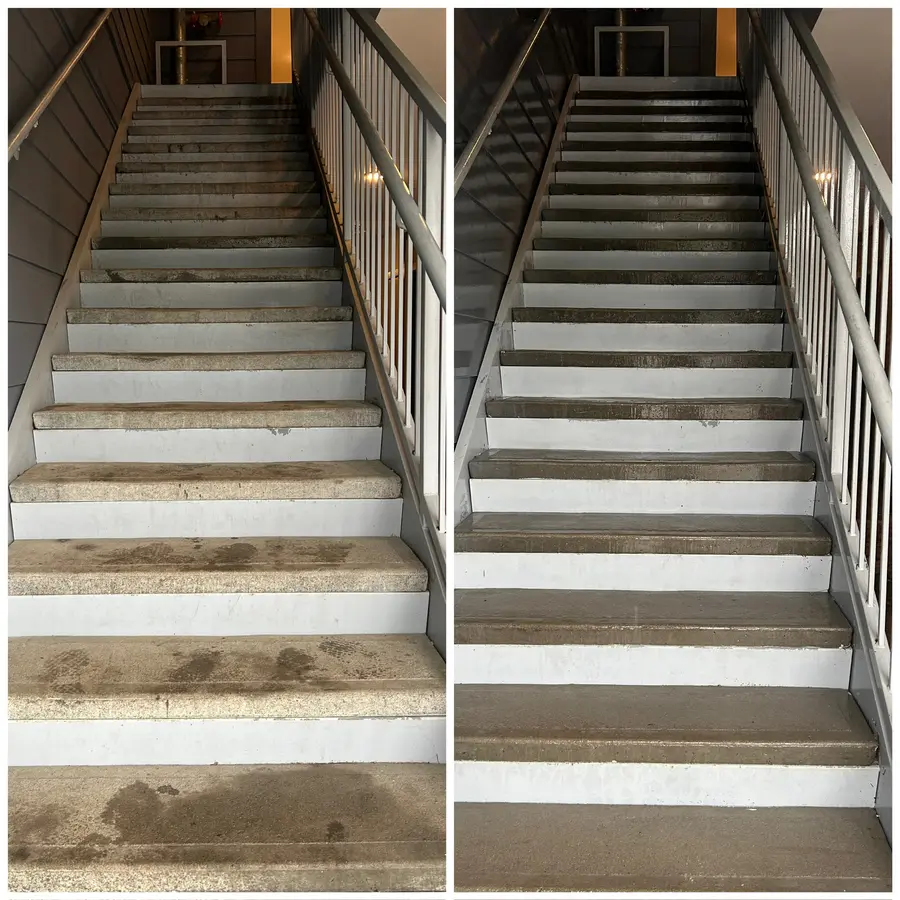
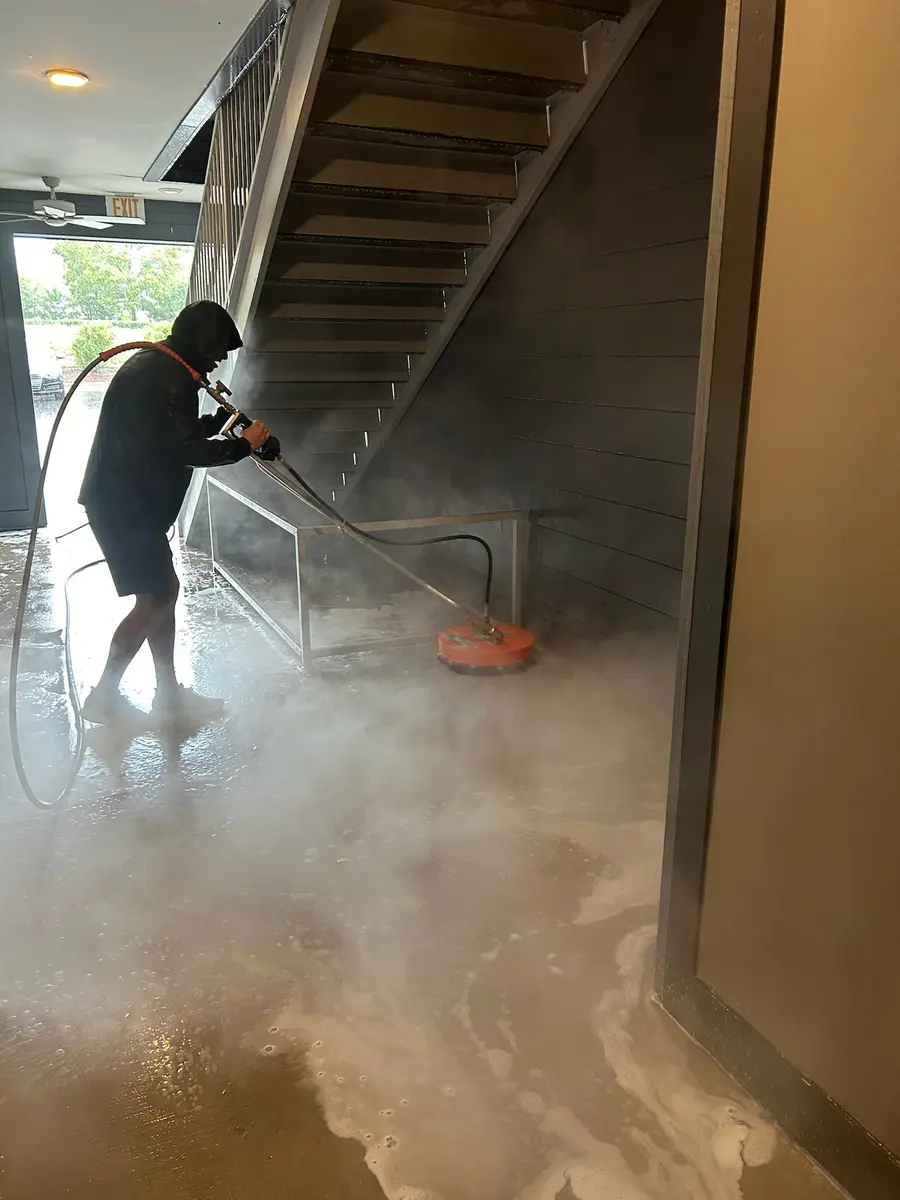
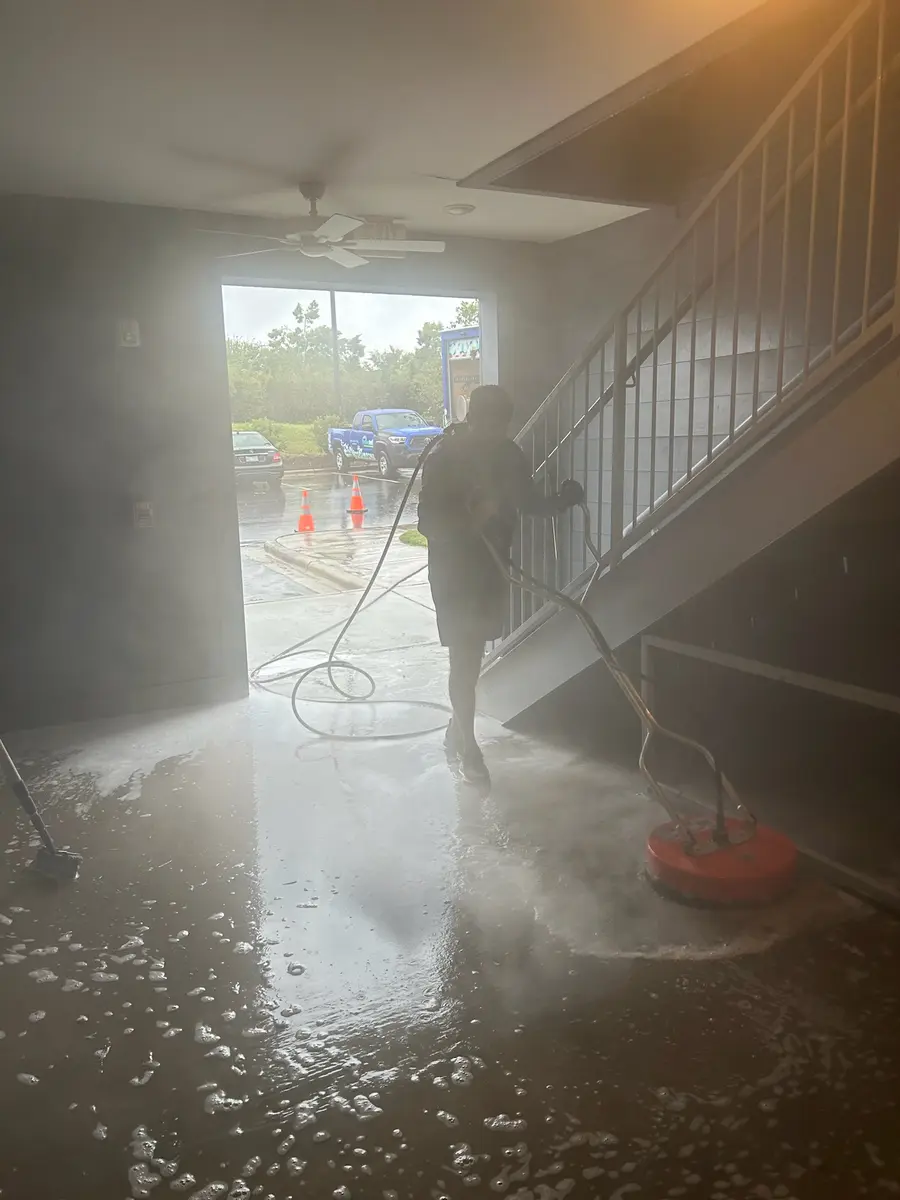
Cleaning a breezeway means more than a quick rinse. Ceiling corners collect cobwebs and dust that trap odor. Walls near trash chute access points pick up residue that a standard rinse does not fully remove without some scrubbing or a degreaser pass. Stair treads and landings need slip-resistant attention, since a wet stairwell with standing grime is a liability concern beyond just appearance, particularly on communities with older residents or families with young children navigating stairs daily.
We treat breezeways and stairwells as their own line item in a multifamily scope, not an afterthought folded into the general building exterior wash. That means dedicated time for ceiling lines, corners, chute access areas, and stair treads, priced and scheduled separately from the broader exterior work.
Parking decks on multifamily properties
Attached or freestanding parking decks on apartment communities collect oil staining from resident vehicles parked in the same stalls repeatedly, plus general debris and leaf litter that gets tracked or blown in. Deck cleaning on a multifamily property follows the same structural care as any parking deck, checking membrane and coating condition before setting pressure, and paying attention to expansion joints, but with the added factor of resident vehicles that need advance notice before a section closes for cleaning.
We schedule deck sections during lower-occupancy hours where possible, working with property management on which levels or sections can close temporarily without stranding residents who need their assigned spot.
Turn cycles and how scheduling fits into leasing operations
Multifamily properties run on a leasing calendar, and unit turnover between residents is often the moment a property manager wants a specific area looking its best. A resident moving out leaves, maintenance turns the unit interior, and the breezeway and entry area leading to that unit benefit from a fresh look before a prospective resident tours or a new resident moves in.
We can prioritize a specific unit’s breezeway section or entry area around a known turn date, separate from the property’s broader recurring schedule. This matters most for leasing offices juggling multiple simultaneous turns, where a specific unit’s curb appeal on move-in day carries real weight for how a new resident feels about the property from day one.
Resident notification and working around an occupied community
Every building on a multifamily property is occupied, which means work happens around residents rather than in an empty space. Breezeway and stairwell cleaning means wet, temporarily slippery surfaces that residents need to know about before they walk through with groceries or kids. Building exterior washing near ground-floor windows and patios means residents should expect overspray and noise during the visit.
We coordinate with property management on notification timing before work begins on any occupied building. Most communities already have a resident communication channel, a portal, email blast, or posted notice, and we work within whatever process is already established rather than asking residents to adapt to something new. For larger communities with many buildings, we sequence the schedule building by building so residents in areas not yet being worked on are not affected by earlier sections.
Curb appeal and tenant retention on a multifamily property
Multifamily property management is a retention business as much as a leasing one, and the physical condition of shared spaces plays a real role in whether a resident renews or starts touring somewhere else. A resident walking through a grimy, smoke-stained breezeway twice a day forms an impression of how well the whole property is managed, and that impression compounds every single day they live there, unlike a prospective tenant who only sees the property during a single tour. Clean, well-kept common areas are one of the more direct ways a property can signal ongoing investment to the residents already living there, which matters more for retention than for the initial leasing decision.
There is a liability dimension specific to multifamily common areas too. Stairwells and breezeways with algae or mildew buildup, especially in shaded or heavily covered sections, create a slip hazard that residents navigate daily, often carrying groceries, managing kids, or dealing with mobility limitations. A documented cleaning schedule for these high-traffic shared surfaces is a meaningful part of managing that exposure, separate from the appearance benefit alone.
Insurance and vendor management across a portfolio
Property management companies overseeing multiple communities often need a consistent vendor relationship rather than negotiating insurance and scope details separately at every property. We provide a certificate of insurance naming your management company as additional insured, and we can structure that consistently across every community in a portfolio rather than treating each property as a one-off vendor relationship. If your portfolio has a preferred vendor onboarding process, tell us during the first conversation and we will work within it.
Per-building versus per-unit pricing structure
Multifamily pricing generally lands on one of two structures depending on the portfolio and how the property tracks maintenance spend.
Per building works well for communities with a manageable building count and varying building sizes, since it prices based on actual breezeway, stairwell, and exterior square footage for each specific building rather than an average.
Per unit works well for larger portfolios or communities where a consistent, predictable per-door number makes budgeting easier across multiple properties under the same management company, even if actual square footage varies slightly building to building.
We can quote either structure. Tell us how your property or portfolio tracks maintenance costs and we will build the number to match.
| Property feature | What it adds to scope | Pricing consideration |
|---|---|---|
| Breezeways and stairwells | Ceiling, wall, and tread cleaning, priced by area | Usually the highest-frequency item in the contract |
| Parking decks | Structural surface, oil staining, expansion joint care | Priced by level or total deck square footage |
| Building exteriors | Siding and cladding wash, same as commercial building washing | Priced by building based on siding type and square footage |
| Leasing office and clubhouse | Highest-visibility structure on the property | Often prioritized ahead of resident buildings |
| Dumpster corrals | Odor and residue management | Frequently needs the shortest recurring interval |
What moves the price
Number of buildings and total unit count set the baseline, since the pricing structure itself, per building or per unit, depends on portfolio size and how the property tracks spend. Breezeway and stairwell square footage gets priced separately from exterior siding, since it is a different scope of work with different attention required. Turn schedule and vacancy timing affect scheduling flexibility more than base price, since a unit turning quickly may need to jump the queue. Resident notification requirements add coordination time on occupied buildings that an empty or vacant property would not need.
Portfolio-wide contracts and property manager reporting
Property management companies overseeing multiple communities often want consistency across properties more than they want the cheapest possible number at any single site, since a fragmented vendor relationship across a portfolio creates its own administrative burden, tracking different contracts, different schedules, and different quality standards property by property. We can structure a consistent contract across every community in a portfolio, same reporting format, same insurance documentation, same general scope definitions, adjusted only for each property’s actual building count and square footage.
After each visit, we can provide a brief summary noting what was completed and flagging anything that needs attention beyond the current scope, useful documentation for a regional property manager who oversees several communities and needs a clear record without personally walking every property after every service visit.
What to expect on the day
We sequence the work building by building, starting with whichever areas property management flags as priority, often the leasing office, a specific turn unit, or the most heavily trafficked breezeway. Breezeways and stairwells get ceiling, wall, and tread treatment. Building exteriors get washed by siding type. Parking decks get scheduled around resident vehicle access. We provide a summary after each visit noting any areas that need attention beyond the current scope, useful for a property manager tracking deferred maintenance across a portfolio.
Starting with one building before expanding to the full property
Larger communities sometimes prefer to start with a single building or a specific problem area, the leasing office and its adjacent breezeway, for example, before committing to a full-property contract. This lets a property manager evaluate the quality and reliability of the work on a smaller scale first, which is a reasonable way to build confidence before expanding to cover every building on a larger property.
We are glad to structure it that way. A single-building trial gives us a chance to understand your specific property’s layout, access considerations, and resident notification process, all of which carry over smoothly once the relationship expands to the rest of the community.
Coordinating with maintenance staff already on site
Most apartment communities have an on-site maintenance team handling day-to-day repairs and upkeep, and coordinating with that team before a cleaning visit avoids overlap or conflicting work in the same area at the same time. We check in with property management or the maintenance lead before starting, particularly on communities where maintenance staff might be actively working on a breezeway light fixture, a stairwell repair, or another item that would affect where and when we can safely work that day.
Call 980-888-8283 to talk through your property or portfolio, or reach out through Rolling Suds of Northeast Charlotte or Rolling Suds of West Charlotte depending on where your community sits.